
The Father Effect: Being a Great Dad
Children raised with active fathers are more confident, achieve greater academic success, show fewer signs of depression, and are less likely to engage in unlawful behaviors. This is the Father Effect.

“When fathers are actively involved with their children, children do better.”
It’s a no-brainer that children with involved and engaged parents will do better in life than those without. Though it is often the bond between mother and child that dominates headlines, it begs the question, what about dad? Children raised with active fathers are more confident, achieve greater academic success, show fewer signs of depression, and are less likely to engage in unlawful behaviors. This is the Father Effect.
“The Father Effect” is the umbrella term for the benefits of a dad’s presence in a child’s life. Men and women are different, so it stands to reason that the way mothers and fathers are different, too! Fathers parent differently, play differently, communicate differently, discipline differently… Growing up with this diversity offers children a broader experience of interactions, encouragement, and relationships in general.
“When fathers are actively involved with their children, children do better,” states Paul Amato, a sociologist who studies parent-child relationships at Pennsylvania State University. “All of this research suggests that fathers are important for a child’s development.” Research on fatherhood and the effects of engaged, thoughtful fathering is minimal compared to the analyses on motherhood, but scientists and psychologists are desperately trying to make up for lost time, and this research may change the way parents parent.
The Importance of an Engaged Father
It’s no surprise that dads who live with their kids and actively attend school activities and other important events have a more positive impact than fathers who are absent or show up sporadically. But even if you don’t live with your kids full-time, your role as a dad is no less important! It simply means you should focus more on quality time with your kids than the quantity of time you spend with them. Fathers who are warm and engaged for an hour have a far more positive impact than those who are with their kids but less engaged for longer periods of time.
Plus, the way dads interact with their kids is different than what moms typically do, and that means moms and dads work together to teach their children different skills, without even meaning to!
W. Brad Wilcox, a sociologist at the University of Virginia who studies marriage and families, reports these findings about some specific ways dads positively influence their children:
Through rough and tumble play, dads teach kids how to control their bodies and emotions.
Kids who have dads who nurture and play with them grow up to make higher grades and have higher IQs.
Dads are also more likely to encourage risk (within reason!), which can influence kids’ ambitions.
Fathers who believe in, and actively support, gender equality, are more likely to raise daughters who have high career ambitions.
Children whose dads are involved in their lives less likely to experience sexual abuse or assault.
Ultimately, Wilcox concludes, “The more dads engage with their kids, the more likely their kids are to flourish.”
Bonding with Baby During Pregnancy
Pregnancy and labor are when the groundwork for the Father Effect begins. 50 years ago, the thought of a dad being in the delivery room was unheard of. Today, dads take active roles during pregnancy, coach their partners through contractions and delivery, swaddle and diaper their new bundles of joy, and help with bedtime routines and 3 a.m. feedings. These actions also show older children the love and partnership between moms and dads; caring for an infant is a shared gift and responsibility.
Related: The Beauty of Fathering During Pregnancy
Fathering Infants/Toddlers
It can be tough for dads to bond with their infants, especially if they’re nursing and naturally spending lots of time bonding with Mom, but numerous studies have shown a link between cognitive development and infants with actively engaged fathers.
The Father Effect becomes more noticeable in the toddler years. Dads assist with developing social skills and relationships with others.
Connecting with Your Kids
Need more ideas for connecting with your kids? First Things First is a great resource for couples and parents, and we recommend reading their article, 7 Ways Dads Can Connect with Their Kids. Here, we’ve excerpted that list of recommendations for making healthy connections as a dad:
Respect your child’s mother
Spend time with your children
Talk to your children
Discipline with love
Be a role model
Be a teacher
Show affection
“The more dads engage with their kids, the more likely their kids are to flourish.”
Being a Good Dad
There are many factors to being a good dad. Modeling healthy lifestyle choices, coaching your partner through labor and delivery, bonding with your infant and toddler, and being present and involved in your kids’ lives all play vital roles in parenting children into smart, confident, successful adults.
It’s easier than you think to be a great dad! Your kids don’t need you to be perfect, but they do need you to be active, loving participant in their lives.
Our mission is to inspire families to live healthy and happy lives. Contact us today to schedule your consultation.
Real Self-Care for Moms
So often, self-care suggestions for moms are things like bubble baths and manicures, which are perfectly nice, but don’t really do more than offer a few minutes of solitude before re-entering the hectic world of parenting. Real self-care for moms involves more than an hour of relaxation; it’s learning behaviors and tools that support good mental and physical health and allow us to calm our stress.

So often, self-care suggestions for moms are things like bubble baths and manicures, which are perfectly nice but don’t do much more than offer a few minutes of solitude before re-entering the hectic world of parenting. Real self-care for moms involves more than an hour of relaxation; it’s learning behaviors and tools that support good mental and physical health and allow us to calm our stress.
“Self-care for mothers means we have a tool kit for daily living, not a “break glass in case of emergency” escape plan.”
Psychologist Christine Meinecke may say it best. She defines self-care as:
“…choosing behaviors that balance the effects of emotional and physical stressors: exercising, eating healthy foods, getting enough sleep, practicing yoga or meditation or relaxation techniques, abstaining from substance abuse, pursuing creative outlets, engaging in psychotherapy. Also essential to selfcare is learning to self-soothe or calm our physical and emotional distress.”
We love how Sarah Rudell Beach broke it down further, in Pathways to Family Wellness. She says:
“…Meaningful self-care for mothers, I would argue, means that we feel truly nurtured and whole where we live day after day…in the crazy zoo of raising little children!
It means we engage in sustainable and doable practices that promote well-being and act as antidotes to the frazzling created by the day-to-day work of parenting.
It means we find ways to be present. It means we find ways to cultivate compassion—for our children and ourselves.
It means we take time for silence—for prayer, meditation, or just three deep breaths—so that we have a stillness and peace that sustains us during the crazybusynoisy moments of our day.’
Parenting is messy, and hard, and funny, and exhausting, and sometimes, more than you think you can handle. But you can do it, mama!
A fundamental element of real self-care for moms is mindfulness, being in the moment, without judgment. Mindfulness offers up space to breathe and think, rather than reacting on autopilot. Mindfulness won’t make your baby cry less, your toddler stop wetting the bed, or your teenager stop pushing boundaries. But it will help you find the mental space to parent with more clarity and peace.
You might also enjoy our blog, For specific suggestions to help you be a more present parent - without trying to be a superhero! -visit our blog, Enjoy Your Kids with Mindful Parenting. If you’re new to mindfulness practice, you may also enjoy reading about How Meditation Changes Your Brain.
Give yourself the gift of self-care this year by learning more about mindfulness and finding ways to take care of your own physical and mental health.
Share the Power of Your Stable Nervous System
If you’ve spent much time around kids, you know there’s no reasoning with a toddler who’s mid-tantrum or an older child who’s in the throes of overwhelm or worry. The same is true for adults! It’s hard to resolve a problem in the middle of an emotional storm. So what can you do to help calm someone who’s angry, anxious, or overwhelmed? Share the power of your stable nervous system.
It’s not as complicated as it sounds.
Sharing your stable nervous system is a form of mindfulness. By being a calming presence, you can help bring someone else’s emotional state back to equilibrium, or something closer to it. In other words, by sitting calmly with them, you can “be the anchor in their proverbial storm.”
“We cultivate this gift, this secret power of our own stable nervous system, each time we sit in stillness. Each time we take a few moments to notice our breath, we invite regulation into our system. And because we are members of a co-regulating species of mammals, our regulation invites the nervous systems around us to regulate as well.”
The next time your child - or anyone you know - seems distraught, give them the gift of your stability. There are several ways to do it, but the main idea is that you remain calm and give them space to talk through their concerns or simply breathe with you. The article, Share the Power of Your Stable Nervous System, offers some specific examples of how to offer your regulated state.
You may also be interested in learning how to Enjoy Your Kids with Mindful Parenting.
“We come into this world immature and dysregulated, and it’s only through the soothing voices, gentle touches, and reciprocal attention of our caregivers that we learn to experience stillness, safety, and peace.”
Learn more about mindfulness practices you can try at home with this video of Belly Breathing with Dr. Joe and Luna.
View the full article in Pathways to Wellness, Issue # 65.
Enjoy Your Kids with Mindful Parenting
We’re all experiencing physical distancing differently. Some of us are enjoying a slower pace and having fun connecting more deeply with our families. Others can’t relate to “slower pace” at all, because they’re working, helping kids with schoolwork, keeping house, and cooking 382 meals a week. Others, still, feel both extremes, careening between boredom and overwhelm. And that’s all okay! No matter where you are on this emotional roller coaster, for Mother’s Day, try to slow down and enjoy your kids. It’s the best gift you could give yourself - and them!
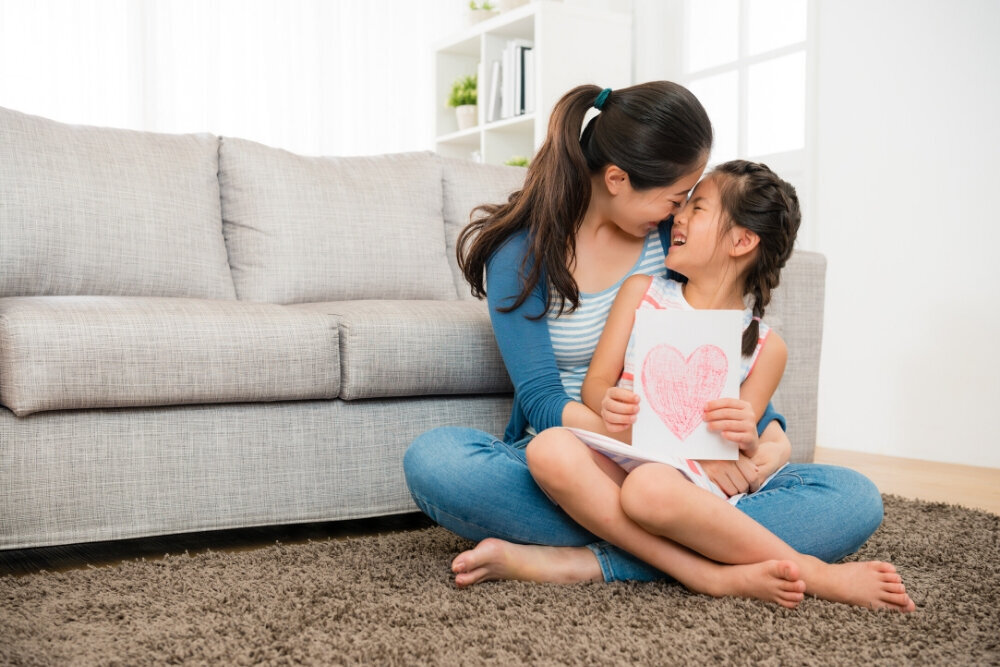
We’re all experiencing physical distancing differently. Some of us are enjoying a slower pace and having fun connecting more deeply with our families. Others can’t relate to “slower pace” at all, because they’re working, helping kids with schoolwork, keeping house, and cooking 382 meals a week. Others, still, feel both extremes, careening between boredom and overwhelm. And that’s all okay! No matter where you are on this emotional roller coaster, for Mother’s Day, try to slow down and enjoy your kids. It’s the best gift you could give yourself - and them!
The days are long, but the weeks are short.
It’s true. One minute your kids are sweet-smelling, cooing infants. The next, they’re playing three sports and eating you out of house and home. The time goes by in a flash! The article, “Enjoy Your Kids,” from Pathways to Wellness, is a great reminder to work on being more present and less perfect so your time with your kids won’t pass in a busy blur.
You can be a more present parent, with these helpful tips for mindful parenting:
Mindfulness can be messy.
Those dishes in the sink will still be there in an hour. But your chance to splash in rain puddles with your son may have passed by then. Give yourself permission to make a mess, or put off a chore in favor of making a memory with your child.Help when asked.
You won’t always be able to drop everything to help, but get into the habit early of acknowledging problems and helping your kids find solutions. One day, their problems will be bigger, and you’ll want them to come to you.
Related: Helping Kids Find BalanceAccept the bad times.
Tears, temper tantrums, and sibling arguments are just part of the package. When you remember that and understand that worry, hunger, tiredness, or testing limits are at the root of the issue, it’s easier to deal with the bad times.Put away the toys. (especially the electronic ones!)
Whether you’re letting your kids play on devices, or you’re often glued to a screen, it’s time to take a break. Do a craft, play a game, have a chat - do something together that doesn’t involve a phone or computer.Keep the conversation going.
Talking and singing to your little ones builds their vocabulary and improves their ability to learn. So keep up the chatter!Relive it through writing.
Journaling has all kinds of good benefits, but when you write about your kids’ funny saying, temper tantrum over something ridiculous, soccer goal, college acceptance, or school play helps you relive those special moments.
There’s one piece of advice I’ve decided to take—to be present, and to enjoy my child the best I can.
Happy Mother’s Day!
Is Your Nursing Posture Triggering a Stress Response?
Parenting an infant is hard. Add hormones, sleepless nights, returning to work, and a busy family schedule to the mix, and it’s no wonder moms often feel stressed out and overwhelmed. But what if there’s another factor causing moms to feel tense? In this case, we’re looking specifically at the relationship between your nursing posture and how it could be triggering a stress response.

Parenting an infant is hard. Add hormones, sleepless nights, returning to work, and a busy family schedule to the mix, and it’s no wonder moms often feel stressed out and overwhelmed! But what if there’s another factor causing moms to feel tense?
“What if the unique stress cascade experienced by first-time moms is largely the result of one thing that most people overlook— the posture we take while nursing or bottle feeding our children?”
If you’ve ever sought chiropractic care, you may already be aware of the connections between our bodies and minds. In this case, we’re looking specifically at the relationship between your nursing posture - with your body rounded forward, leaning in toward your baby - and how it could be triggering a stress response.
Whether you’re nursing, pumping, or bottle feeding your baby, you’re most likely spending a good amount of time in a posture that’s activating your sympathetic nervous system. This rounded, forward physical position sends messages to your brain similar to the fight-or-flight signal. Spending too much time in this forward-leaning posture can create physical strain and pain, as well.
Related: The Fourth Trimester: Planning for Your Postpartum Recovery
If you think your nursing posture is triggering a stress response that keeps you feeling irritable or on edge, shift your posture while nursing and throughout the day to see if your mood shifts. Also try the natural breastfeeding position, lying down, with baby’s belly on yours. Your body will be more relaxed, while your baby has an easier time latching. Finally, schedule an appointment with a chiropractor, who can help you further correct any structural imbalances that are triggering your stress response or causing physical pain.
Related: Positioning Your Baby for Breastfeeding
The Pathways to Wellness article, Nursing Posture and Its Role in Sympathetic Dominance, offers these pointers for at-home remedies for improving your posture:
While feeding or holding your child, sit or stand tall, with your chest open and shoulders down and back. There should be a sensation of the body, lengthening upward and expanding outward, with the torso resting on a balanced pelvis and secure lower back.
If your feet don’t reach the floor while you’re feeding your baby, use a footstool.
Stretch your chest and your hamstrings, and take time to stretch your other muscles and ligaments when you can.
Invest in an ergonomic breastfeeding pillow for support. This shouldn’t be a substitute for ideal posture, but an aid to it.
Schedule at least 10 minutes of quiet alone time every day to help reboot your nervous system to autonomic balance.
Learn more about the relationship between your posture and your sympathetic nervous system in the Pathways to Wellness article, Nursing Posture and Its Role in Sympathetic Dominance.
For local breastfeeding support, contact IBCLC certified lactation consultant, Ashley Lucas.
Chiropractic as a Solution for Breastfeeding Difficulties
Moms set out with the best of intentions, but when breastfeeding difficulties arise, they often give up early, because they can’t find the support or solutions they need to successfully continue. Chiropractor Jeanne Ohm suggests that chiropractic care may be the missing link.

“Among other numerous benefits of chiropractic care for infants, the ability to successfully breastfeed has life long consequences for the baby’s future health potential.”
New, breastfeeding mothers worry about all kinds of things: ”Is my baby latching correctly? Why does she want to nurse so often? Is it normal for my nipples to be so sore? Why does she only want to nurse in one position?”
What moms may not realize is that chiropractic care for their infant could resolve many common breastfeeding difficulties. The birthing process can be traumatic for your baby, putting stress on his head and spine. As a result, your baby may have biomechanical injuries that are affecting his ability to breastfeed.
Some of the most common indicators of difficulty with breastfeeding are:
Babies who cannot latch firmly
Babies who can latch and not sustain sucking
Babies who are unable to smoothly coordinate suckling, swallowing, and breathing
Babies who can feed in only one position
Babies who seem dissatisfied when nursing or who remain fussy and distressed throughout the day
Babies who chew and damage the mother’s nipples
Babies who may not feed any better from other devices
Babies who have the need to suck 24/7
(excerpted from Breastfeeding Difficulties and Chiropractic)
Exclusive breastfeeding is best for the first six months, for all kinds of good reasons. Breastfeeding boosts your baby’s immune system, strengthens your emotional bond, and provides the nutritional support he needs for physical and neurological development.
Moms set out with the best of intentions, but when breastfeeding difficulties arise, they often give up early, because they can’t find the support or solutions they need to successfully continue.
Chiropractor Jeanne Ohm, in Pathways to Wellness, suggests that chiropractic care may be the missing link. Chiropractic addresses the underlying biomechanical causes behind your baby’s breastfeeding difficulties, so you and your baby can continue enjoying the benefits of breastfeeding. It’s one more excellent reason to schedule a chiropractic exam for your newborn, in support of his lifelong health and well-being.
Get more breastfeeding help in our blog, Five Breastfeeding Tips for Mom.
For local breastfeeding support, contact Ashley Lucas, RN, IBCLC.
Source: Pathways to Family Wellness magazine, Issue #11.
Overcoming Your Fatherhood Fears
As parents, we may have clear ideas of what our family life should look like. But how often has your life ended up exactly as you imagined it would? Probably not very often! You can let go of those preconceived ideas of what being a good father looks like, and accept the ups and downs of what your real life looks like.
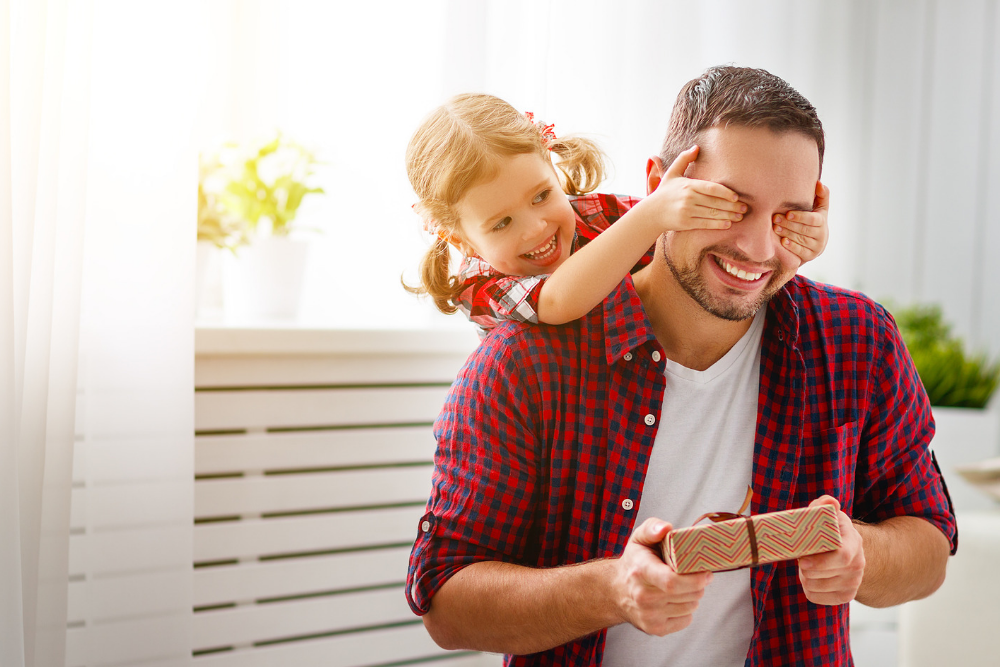
When faced with choices in our lives, we sometimes act out of fear - of failure, of poverty, or inadequacy - or they may be based on our expectations of how things are supposed to happen. As parents, we may have clear ideas of what our family life should look like. But how often has your life ended up exactly as you imagined it would? Probably not very often!
When you find out you’re going to be a father, you may ask yourself some of these questions, from the article, Fears and the Fathering Paradigm:
“Will I be a good father?
Will my children love me?
Can I escape my own upbringing, and do better?
Can I parent with my heart, more than with my head?
Will my partner still love me if I am not a good father?
Will she even tell me if I’m doing poorly?
Will I ever learn enough, know enough, and contribute enough to our parenting relationship?
How will I respond if the kids get sick?
How can I keep them safe, provide for them, provide for my partner, and stay happy at the same time?”
Becoming a parent can be overwhelming! Wondering these things is perfectly normal, and you may start relying on the things you think parenting should look like, to guide you through the unknown.
“You can view today as a tipping point. Right here, right now. You can become a more engaged father and partner, who is open to outcomes rather than attached to one outcome.”
It’s okay to enter marriage or parenting with a vision of what you want your relationships to look like. Those thoughts give you a framework to work with, a general plan to follow. But more importantly, you should face down your fears of change or of the unknown and embrace the adventures and uncertainties your life and your loved ones throw at you. You’ll not only enhance your own experiences, but you’ll be an excellent role model for your kids. Teach them to approach life with joy! Sing with them, dress up in silly costumes, build a blanket forts together - even if it means spending more time tidying up later.
“I believe that parenting and partnering are not commitments that need to be adhered to and sacrificed for. They are privileges to be celebrated and enjoyed. And that, in and of itself, may be enough of a case for change for most people.”
You can let go of those preconceived ideas of what being a good father looks like, and accept the ups and downs of what your real life looks like.
There are plenty of parenting books out there, but no single book tells you what fatherhood should be like for you. Move past your fears, ask for help, and let go of those “should haves” to enjoy the present.
Source: Pathways to Family Wellness magazine, Issue #50.
The Beauty of Fathering During Pregnancy
“Babies in the womb want their fathers to know that you matter: Fathering from the very beginning matters. You are their special person, their father, and they know you are their father from preconception forward.”
Discover 12 guiding principles of prenatal and perinatal psychology to learn how you can connect deeply with your baby during pregnancy and in infancy.

“Babies in the womb want their fathers to know that you matter: Fathering from the very beginning matters. You are their special person, their father, and they know you are their father from preconception forward.”
In her 2018 article, “Consciousness at the Beginning of Life,” published in Pathways to Family Wellness, Wendy Anne McCarty, Ph.D. explored a shift in the way we understand babies and their earliest human experiences. In a more recent article, she digs deeper into the topic and shares more about what babies are teaching us and how this newfound knowledge can help men father their babies, even during pregnancy.
“The more we hold, meet and care for babies as conscious, sensitive beings from the beginning of their lives, the more we help them thrive in the fuller alignment of their multidimensional wholeness. ”
McCarty explains that, from conception, babies are whole beings craving a human experience. She maintains that dads play an important role in pregnancy by being intentional about forming a relationship with the baby. As a father, you can help shape that tiny being into a person with a strong sense of self and wholeness. You can do that by caring for your baby, singing and talking to her, and keeping your environment as “harmonious, healthy, and as stress-free as possible.” These early experiences in the womb create a bond with your baby and form the foundation of his beliefs, values, feelings, and thoughts.
The Birth of a Father
In the article, “The Beauty of Fathering During Pregnancy: What Babies are Teaching Us,” McCarty interviews a couple about their experience as parents, and they talk specifically about their thoughts and feelings during pregnancy. The father shares that men may feel excluded or fearful during pregnancy. He, though, felt very connected to his baby and said that special time drew him closer to his wife, even as they each bonded with their unborn child.
Related: 8 Choices for a Healthier Pregnancy
They vowed to love their child and give him everything they possibly could. To that end, they treated the pregnancy as “magical,” playing music, talking to their baby, and simply including him in their relationship so he’d know he was cherished.
Read the full article for their interview, then continue below for McCarty’s 12 guiding principles of prenatal and perinatal psychology to learn more about your baby’s needs and the ways you can connect with your baby during pregnancy and in infancy.
12 Guiding Principles Prenatal and Perinatal Psychology
Nurturing Human Potential and Optimizing Relationships from the Beginning of Life
1. The Primary Period
The primary period for human development occurs from preconception through the first year of postnatal life. This is the time in which vital foundations are established at every level of being: physical, emotional, mental, spiritual, and relational.
2. Forming the Core Blueprint
Experiences during this primary period form the blueprint of our core perceptions, belief structures, and ways of being in the world with others and ourselves.
These foundational elements are implicit, observable in newborns, and initiate lifelong ways of being.
These core implicit patterns profoundly shape our being in life-enhancing or life-diminishing directions.
3. Continuum of Development
Human development is continuous from prenatal to postnatal life. Postnatal patterns build upon earlier prenatal and birth experiences.
Optimal foundations for growth and resiliency, including brain development, emotional intelligence, and self-regulation are predicated upon optimal conditions during the pre-conception period, pregnancy, birth, and the first year of life.
Optimal foundations of secure attachment and healthy relationships are predicated upon optimal relationships during the pre-conception period, during pregnancy, the birth experience, and the first year of life.
4. Capacities & Capabilities
Human beings are conscious, sentient, aware, and possess a sense of Self even during this very early primary period.
We seek ever-increasing states of wholeness and growth through the expression of human life. This innate drive guides and infuses our human development.
From the beginning of life, babies perceive, communicate, and learn in ways that include an integration of mind-to-mind, energetic, and physical-sensorial capacities and ways of being.
5. Relationship
Human development occurs within relationship from the beginning. Human connections and surrounding environment profoundly influence the quality and structure of every aspect of baby’s development.
From the beginning of life, baby experiences and internalizes what mother experiences and feels. Father’s and/or partner’s relationship with mother and baby are integral to optimizing primary foundations for baby.
All relationships and encounters with mother, baby, and father during this primary period affect the quality of life and baby’s foundation. Supportive, loving, and healthy relationships are integral to optimizing primary foundations for baby.
6. Innate Needs
The innate need for security, belonging, love and nurturing, feeling wanted, feeling valued, and being seen as the Self we are is present from the beginning of life. Meeting these needs and providing the right environment supports optimal development.
7. Communication
Babies are continually communicating and seeking connection. Relating and responding to baby in ways that honor their multifaceted capacities for communication supports optimal development and wholeness.
8. Mother-Baby Interconnectedness
Respecting and optimizing the bond between mother and baby and the mother-baby interconnectedness during pregnancy, birth, and infancy is of highest priority.
9. Bonding
Birth and bonding is a critical developmental process for mother, baby, and father/partner that forms core patterns with lifelong implications.
The best baby and mother outcomes occur when mother feels empowered and supported and the natural process of birth is allowed to unfold with minimal intervention and no interruption in mother-baby connection and physical contact. If any separation of baby from mother occurs, continuity of father’s contact and connection with baby is vital.
Baby responds and thrives best when communicated with directly, when the relationship with mother is undisturbed, and when the process of birth supports baby’s ability to orient and integrate the series of events.
10. Resolving & Healing
Resolving and healing past and current conflicts, stress, and issues that affect the quality of life for all family members is of highest priority. Doing so before pregnancy is best. When needed, therapeutic support for mother, baby, and father provided as early as possible during this vital primary period is recommended for optimal outcomes.
11. Underlying Patterns
When unresolved issues remain or less than optimal conditions and experiences occur during conception, pregnancy, birth, and the first postnatal year, life-diminishing patterns often underlay health issues, stress behaviors, difficulty in self-regulation, attachment, learning, and other disorders over the lifespan.
12. Professional Support
These early diminishing patterns embed below the level of the conscious mind in the implicit memory system, subconscious, and somatic patterns. Professionals trained in prenatal and perinatal psychology can identify these patterns and support babies, children, parents, and adults to heal and shift these primary patterns to more lifeenhancing ones at any age. When parents resolve and heal their own unresolved issues from their child’s pregnancy and birth, their children benefit at any age.
Excerpted from Pathways to Family Wellness. Read the full article.
Helping Kids Find Balance
Parenting today is a brave new frontier, filled with all kinds of new health threats. Food is filled with preservatives or covered in pesticides, our water is full of chemicals and pharmaceutical residue, and kids experience physical and emotional stress. So what’s a parent to do to help their kids find balance?

Parenting today is a brave new frontier, filled with all kinds of new health threats. Food is filled with preservatives or covered in pesticides, our water is full of chemicals and pharmaceutical residue, and kids experience physical and emotional stress. So what’s a parent to do to help their kids find balance?
Jennifer Barham-Floreani, DC, offers pointers in the article, Kids Out of Balance, published in Pathways to Wellness. She explains what it means to be healthy and in balance and also includes a list of signs that can indicate your child is out of balance. Symptoms of a body out of balance include things like:
anxiety
poor concentration
difficulty sleeping
recurring allergies, colds and flu
and poor balance and coordination
In the article, she notes that most children will have already experienced three major falls by the age of 3, and, by the age of 7, kids may have fallen thousands of times! Between rough play, accidents, and trauma from birth, even very young children have already experienced physical stressors that keep the nervous system from working as well as it should.
“Drugs are not always the answer. There are safe and effective approaches and holistic health practitioners who can empower us to navigate our family’s health outcomes.”
We can’t remove all chemical and environmental triggers, but making healthy choices, encouraging plenty of physical activity, and seeking regular chiropractic care for your kids are all ways to help keep their bodies healthy and balanced.
Read the full article to learn more about helping your kids find balance.
Confessions of an "Old Mom" - In the New Year
As an "old mom", my 60-year-old self is always amazed at what is available to parents raising kids these days. It sometimes seems as though everything from safety and health to food and nutrition has completely changed. Even welcoming in a New Year seems to have taken on a new focus.

As an "old mom", my 60-year-old self is always amazed at what is available to parents raising kids these days. It sometimes seems as though everything from safety and health to food and nutrition has completely changed. Even welcoming in a New Year seems to have taken on a new focus.
Way back in the day (yes, I am talking about the 1960's here!), New Year's included making resolutions. But, these resolutions were generally broad-based and not too specific. Typical resolutions were things like:
Be more generous; Make more time for family and/or friends; Worry less.
By the 1980's - 1990's, the New Year focus was more detailed and self-centered. Common resolutions included things like:
Lose weight; Get a better job; Go back to school.
Now, in 2017, many New Year's resolutions seem to have more plan detail and also often include more people than just the resolution maker! These resolutions appear more like life guidelines rather than ideas to be tried and discarded until the next year rolls around. Some samples of these resolutions are:
Model healthy habits for my children; Reduce time family members spend on devices; Increase active time with my family.
While these resolutions still require change and adjustment, the goals seem more attainable. And, with the inclusion of family members, these resolutions have a positive impact on more than just the one making the resolution.
To an "old mom" like me, this is a new and welcome concept. I wish I had thought of this approach when I was raising my own daughters. But, now that I am aware, I can choose to make resolutions that will positively impact my grandkids!
And to do just that, I ask my youngest grandson to turn off his tablet and come help me make the Orange-banana freezer pops recipe he found in the new kids' cookbook he received for Christmas. This turns into a multi-win for us all. Less device time, a fun activity with one of my favorite people and the added bonus of a pretty tasty treat! SO glad this "old mom" can still learn some new tricks!
Guest Blogger - Joy Johnson.
Read more by Joy in Confessions of an Old Mom - The Heart of the Matter.
Image courtesy of canva.com