
Chiropractic Shown to Help Infants Suffering from Failure to Thrive
Recent research reported in the Journal of Pediatric, Maternal & Family Health – Chiropractic indicates that chiropractic care may help infants who are failing to thrive. The study followed a 3-month old who was delivered by C-section and was suffering from failure to thrive, colic, GER and acid reflux.

Recent research reported in the Journal of Pediatric, Maternal & Family Health – Chiropractic indicates that chiropractic care may help infants who are failing to thrive. The study followed a 3-month old who was delivered by C-section and was suffering from failure to thrive, colic, GER and acid reflux.
“Numerous case studies and some clinical studies are revealing that there is a relationship between abnormalities in the spine, the nervous system and the various health challenges that infants experience.”
Traditional treatments, including several medicines, weren’t improving her situation, so her parents sought help from a chiropractor. After an exam and X-rays, the chiropractor confirmed that the baby had structural shifts that could be interfering with healthy nerve function.
Following chiropractic treatment, her colic, acid reflux, GER and failure to thrive were all resolved. And, her parents also saw improvements in her sleep, weight gain and mood!
Learn more about Why Infants Need Chiropractic Care.
The researchers recommend further study on chiropractic care for infants who have suffered trauma at birth, but this case suggests that chiropractic is a safe, effective option to consider when an infant is failing to thrive.
Healthy Recipe: Gluten-Free Veggie Pizza
Anyone who eats a gluten-free diet knows that baked goods and bread substitutes don’t always turn out quite right. They can be dense, dry or gummy. So it’s worth celebrating when you find a recipe that works! This gluten-free veggie pizza is bursting with flavor, and the crust is crispy and delicious.

Anyone who eats a gluten-free diet knows that baked goods and bread substitutes don’t always turn out quite right. They can be dense, dry or gummy. So it’s worth celebrating when you find a recipe that works! Thanks to Maite Bou, we’ve got one for you. This gluten-free veggie pizza is bursting with flavor, and the crust is crispy and delicious.
We’ve shared the recipe for the gluten-free crust below, and you can top it with your favorite veggies and herbs, like tomatoes, basil, onions, mushrooms, garlic and peppers.

Ingredients
2 medium-size zucchini or summer squash
1 cup oat flour (GF) or brown rice flour
2 1/2 Tbsp. flax meal + 4 Tbsp. water
1 Tbsp. olive oil
3/4 to 1 tsp. salt + 1 tsp. dried oregano
Instructions
Prepare zucchini paste:
Grate (cheese grinder) the 2 zucchinis and steam them. Let them cool off completely first, then add the grated zucchini to a nut milk bag and patiently squeeze all the water out. Keep squeezing until most of the water is out.
Preheat oven to 400 F.
Mix the flax meal and water well in a small container and let it gel up for about 3 min.
Mix all the ingredients in a bowl and form a ball.
On top of a parchment paper, flatten the ball with your hands and using a rolling pin flatten the dough to fairly thin and finish shaping the sides with your hands. Lightly fork the dough.
Bake the dough for 15 min.
Remove from the oven, and add any toppings you like!
Put back in oven for 18-20 minutes, max!
Love Italian flavors? Try this recipe for Zuppa Tuscana!
Recipe courtesy of Maite Bou.
Is Homework Helping or Hurting Our Kids?
Kids spend their days at school learning. Then they come home and spend their evenings doing homework - even kindergartners! It seems like the extra work should be boosting grades or teaching non-academic skills like time management and perseverance. But is all that homework helping our hurting our kids?

Kids spend their days at school learning. Then they come home and spend their evenings doing homework - even kindergartners! It seems like the extra work should be boosting grades or teaching non-academic skills like time management and perseverance. But is all that homework helping our hurting our kids?
The author of The Homework Myth, Alfie Kohn, says it’s hurting our kids more than it’s helping them. Studies have shown few benefits from homework, especially in younger children. Studies also show plenty of negative effects, like strained familial relationships and stressed out, exhausted kids who aren’t making greater academic strides. What’s worse, kids who are spending so much time on homework have less time to spend on play, which does help kids in myriad ways.
As parents, you don’t control how much homework your kids’ teachers assign. But you can talk to the teachers and administrators at your school to express your concerns about homework. You can also look for opportunities to help your kids get their homework done before they come home. For example, after-school care programs and homework clubs may provide time for getting work done at school, so there’s more free time later for family activities, play time, and rest.
Learn more about the harmful effects of homework in Down with Homework, published in Pathways to Family Wellness magazine, Issue #12.
Is Your Nursing Posture Triggering a Stress Response?
Parenting an infant is hard. Add hormones, sleepless nights, returning to work, and a busy family schedule to the mix, and it’s no wonder moms often feel stressed out and overwhelmed. But what if there’s another factor causing moms to feel tense? In this case, we’re looking specifically at the relationship between your nursing posture and how it could be triggering a stress response.

Parenting an infant is hard. Add hormones, sleepless nights, returning to work, and a busy family schedule to the mix, and it’s no wonder moms often feel stressed out and overwhelmed! But what if there’s another factor causing moms to feel tense?
“What if the unique stress cascade experienced by first-time moms is largely the result of one thing that most people overlook— the posture we take while nursing or bottle feeding our children?”
If you’ve ever sought chiropractic care, you may already be aware of the connections between our bodies and minds. In this case, we’re looking specifically at the relationship between your nursing posture - with your body rounded forward, leaning in toward your baby - and how it could be triggering a stress response.
Whether you’re nursing, pumping, or bottle feeding your baby, you’re most likely spending a good amount of time in a posture that’s activating your sympathetic nervous system. This rounded, forward physical position sends messages to your brain similar to the fight-or-flight signal. Spending too much time in this forward-leaning posture can create physical strain and pain, as well.
Related: The Fourth Trimester: Planning for Your Postpartum Recovery
If you think your nursing posture is triggering a stress response that keeps you feeling irritable or on edge, shift your posture while nursing and throughout the day to see if your mood shifts. Also try the natural breastfeeding position, lying down, with baby’s belly on yours. Your body will be more relaxed, while your baby has an easier time latching. Finally, schedule an appointment with a chiropractor, who can help you further correct any structural imbalances that are triggering your stress response or causing physical pain.
Related: Positioning Your Baby for Breastfeeding
The Pathways to Wellness article, Nursing Posture and Its Role in Sympathetic Dominance, offers these pointers for at-home remedies for improving your posture:
While feeding or holding your child, sit or stand tall, with your chest open and shoulders down and back. There should be a sensation of the body, lengthening upward and expanding outward, with the torso resting on a balanced pelvis and secure lower back.
If your feet don’t reach the floor while you’re feeding your baby, use a footstool.
Stretch your chest and your hamstrings, and take time to stretch your other muscles and ligaments when you can.
Invest in an ergonomic breastfeeding pillow for support. This shouldn’t be a substitute for ideal posture, but an aid to it.
Schedule at least 10 minutes of quiet alone time every day to help reboot your nervous system to autonomic balance.
Learn more about the relationship between your posture and your sympathetic nervous system in the Pathways to Wellness article, Nursing Posture and Its Role in Sympathetic Dominance.
For local breastfeeding support, contact IBCLC certified lactation consultant, Ashley Lucas.
Chiropractic as a Solution for Breastfeeding Difficulties
Moms set out with the best of intentions, but when breastfeeding difficulties arise, they often give up early, because they can’t find the support or solutions they need to successfully continue. Chiropractor Jeanne Ohm suggests that chiropractic care may be the missing link.

“Among other numerous benefits of chiropractic care for infants, the ability to successfully breastfeed has life long consequences for the baby’s future health potential.”
New, breastfeeding mothers worry about all kinds of things: ”Is my baby latching correctly? Why does she want to nurse so often? Is it normal for my nipples to be so sore? Why does she only want to nurse in one position?”
What moms may not realize is that chiropractic care for their infant could resolve many common breastfeeding difficulties. The birthing process can be traumatic for your baby, putting stress on his head and spine. As a result, your baby may have biomechanical injuries that are affecting his ability to breastfeed.
Some of the most common indicators of difficulty with breastfeeding are:
Babies who cannot latch firmly
Babies who can latch and not sustain sucking
Babies who are unable to smoothly coordinate suckling, swallowing, and breathing
Babies who can feed in only one position
Babies who seem dissatisfied when nursing or who remain fussy and distressed throughout the day
Babies who chew and damage the mother’s nipples
Babies who may not feed any better from other devices
Babies who have the need to suck 24/7
(excerpted from Breastfeeding Difficulties and Chiropractic)
Exclusive breastfeeding is best for the first six months, for all kinds of good reasons. Breastfeeding boosts your baby’s immune system, strengthens your emotional bond, and provides the nutritional support he needs for physical and neurological development.
Moms set out with the best of intentions, but when breastfeeding difficulties arise, they often give up early, because they can’t find the support or solutions they need to successfully continue.
Chiropractor Jeanne Ohm, in Pathways to Wellness, suggests that chiropractic care may be the missing link. Chiropractic addresses the underlying biomechanical causes behind your baby’s breastfeeding difficulties, so you and your baby can continue enjoying the benefits of breastfeeding. It’s one more excellent reason to schedule a chiropractic exam for your newborn, in support of his lifelong health and well-being.
Get more breastfeeding help in our blog, Five Breastfeeding Tips for Mom.
For local breastfeeding support, contact Ashley Lucas, RN, IBCLC.
Source: Pathways to Family Wellness magazine, Issue #11.
Moving Meditation During Pregnancy Calms Your Mind and Body
Walking is an excellent form of exercise at all stages of your pregnancy, and you may also find that walking gives you time to clear your head and calm your mind. You can take the benefits even further with a breath walk - a form of walking meditation.
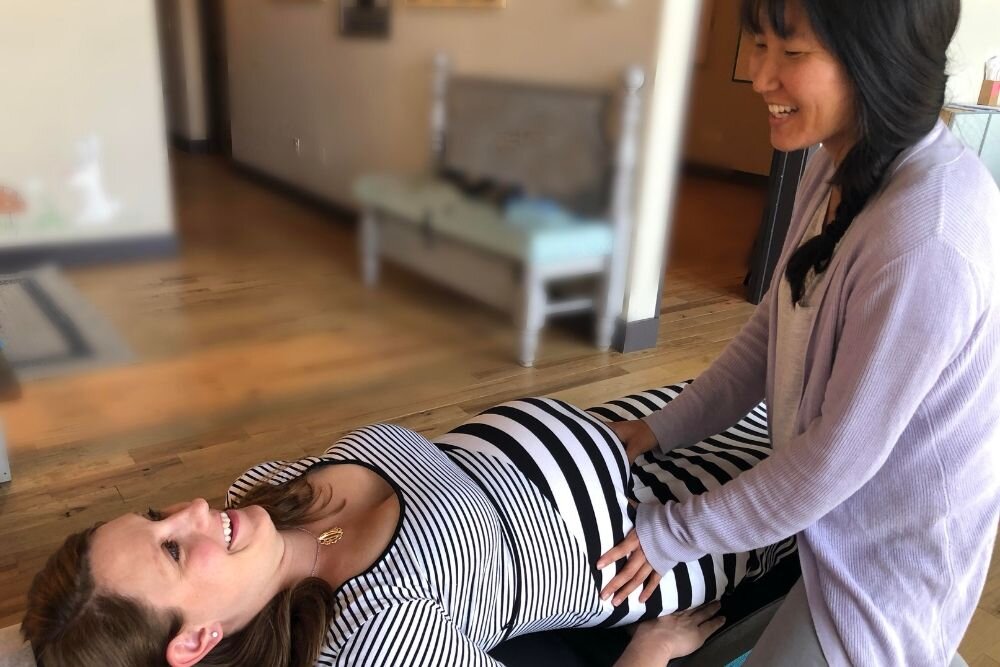
Walking is an excellent form of exercise at all stages of your pregnancy, and you may also find that walking gives you time to clear your head and calm your mind. You can take the benefits even further with a breath walk - a form of walking meditation.
When you’re getting started, find a quiet place with some room to move. With your feet shoulder-width apart, take several deep breaths. Relax your jaw, neck and shoulders, then begin breathing in a four-part rhythm:
Breathe in for four counts.
Hold your breath for four counts.
Exhale for eight counts.
Hold your breath for four counts.
Do this a few times to get used to the pattern, then begin coordinating steps with your breathing. At first, take a step with each inhale and exhale, pausing while you hold your breath. If you want to speed things up a tad, you can take four steps with each inhale and four steps with each exhale.
These breath walks are excellent preparation for childbirth and beyond, because you’re learning to “mindfully multitask.” Most women are able to walk comfortably during early stages of labor; consider doing a breath walk to calm your mind.
Learn more about breath walks in Breath Walk for Pregnancy, and learn about eight choices you can make for a healthy pregnancy on our blog.
Source: Pathways to Family Wellness magazine, Issue #26.
Strawberry Watermelon Popsicles
Nothing beats a fruity, frozen treat on a hot summer’s day! With only three ingredients, these refreshing Strawberry Watermelon Popsicles from One Lovely Life are Paleo and vegan friendly, plus, they’re a cinch to make!

Image used with permission from One Lovely Life.
Nothing beats a fruity, frozen treat on a hot summer’s day! With only three ingredients, these refreshing Strawberry Watermelon Popsicles from One Lovely Life are Paleo and vegan friendly. Plus, they’re a cinch to make!
Ingredients
3 cups watermelon (cubed)
1 cup strawberries (fresh or frozen)
juice and zest of 1 lime
For the instructions and a printable version of the recipe, please visit One Lovely Life.
Yield: about 10 popsicles
Chiropractic Provides Relief from Migraines and Chronic Pain
Recent research shows that people who suffer from chronic pain and migraines may find relief through chiropractic care. In the study, researchers followed a 52-year-old patient who had suffered from migraines and pain in her left arm and leg for over 20 years. Her pain was affecting her quality of life and sometimes sent her to the hospital for relief.

Recent research shows that people who suffer from chronic pain and migraines may find relief through chiropractic care. In the study, researchers followed a 52-year-old patient who had suffered from migraines and pain in her left arm and leg for over 20 years. Her pain was so severe that she sometimes went to the hospital for relief, and the persistent pain was affecting her quality of life.
“Chronic pain disorders, including fibromyalgia, back pain, and neck pain, are more common among chronic migraine sufferers.”
Prescription medication offered only slight relief, but after five weeks of treatments (three times/week), her symptoms were greatly reduced. At that point, she opted to continue chiropractic care on a monthly basis.
Read the full study for more details about this patient’s situation and how a similar treatment plan could help you find relief from your headaches or chronic pain.
Red, White and Blue Popsicles
Just in time for the Fourth of July, we’ve discovered a refreshing and festive summer treat. The popsicles only have four ingredients, so they’re quick and easy to make. The only hard part is waiting for them to freeze so you can eat them!

Image used with permission from Capturing Joy
Just in time for the Fourth of July, we’ve discovered a refreshing and festive summer treat. Cool down and enjoy this refreshing and colorful dessert from Capturing Joy with Kristen Duke. They only have 4 ingredients, so they’re quick and easy to make. The only hard part is waiting for them to freeze!
Ingredients
2 pints raspberries
1 cup blueberries
2 cups vanilla yogurt (or any flavor of your choice)
2 Tbsp agave nectar or sweetener of your choice
Directions
Puree raspberries with sweetener.
Pour raspberry puree into popsicle molds.
Layer yogurt in the popsicle molds.
Mix blueberries with yogurt, then add them to the popsicle molds.
Freeze until solid.
Serves 6
View or print the full recipe at Capturing Joy with Kristen Duke.
For more summer treats, check out the recipe for strawberry watermelon popsicles. They only have three ingredients, and they’re 100% fruit!
Chiropractic Care Keeps This Mom Fit and Strong
A mom of two, who was injured in a car wreck as a teen, describes how chiropractic care has allowed her to stay fit and strong for her kids and for her life.
A mom of two, who was injured in a car wreck as a teen, describes how chiropractic care has allowed her to stay fit and strong for her kids and for her life.
Chiropractic Care for Athletes
Amateur and professional athletes alike constantly strive to improve. They want to be faster, stronger, more flexible. Regular chiropractic care can help! Not only does it boost athletic performance, but it also speeds healing and recovery time and can help prevent injury.

Amateur and professional athletes alike constantly strive to improve. They want to be faster, stronger, more flexible. Regular chiropractic care can help! Not only does it boost athletic performance, but it also speeds healing and recovery time and can help prevent injury.
How? Chiropractic care focuses on your body’s structure, correcting misalignments and improving your nervous system’s ability to send and receive messages.
“Postural strength and coordination are essential for injury prevention and sports performance.”
Even if you’re not an athlete, you can enjoy the benefits of chiropractic in your daily life, as your body is better able to handle your daily physical activities and stressors. And, considering that nearly 36% of all injuries to children in the U.S. are caused by sports and recreational activities, it’s a good idea for your child athlete to receive chiropractic care, as well.
Read Chiropractic and Athletes for more information, and contact us to schedule an appointment.
Source: Pathways to Family Wellness magazine, Issue #07.
Overcoming Your Fatherhood Fears
As parents, we may have clear ideas of what our family life should look like. But how often has your life ended up exactly as you imagined it would? Probably not very often! You can let go of those preconceived ideas of what being a good father looks like, and accept the ups and downs of what your real life looks like.

When faced with choices in our lives, we sometimes act out of fear - of failure, of poverty, or inadequacy - or they may be based on our expectations of how things are supposed to happen. As parents, we may have clear ideas of what our family life should look like. But how often has your life ended up exactly as you imagined it would? Probably not very often!
When you find out you’re going to be a father, you may ask yourself some of these questions, from the article, Fears and the Fathering Paradigm:
“Will I be a good father?
Will my children love me?
Can I escape my own upbringing, and do better?
Can I parent with my heart, more than with my head?
Will my partner still love me if I am not a good father?
Will she even tell me if I’m doing poorly?
Will I ever learn enough, know enough, and contribute enough to our parenting relationship?
How will I respond if the kids get sick?
How can I keep them safe, provide for them, provide for my partner, and stay happy at the same time?”
Becoming a parent can be overwhelming! Wondering these things is perfectly normal, and you may start relying on the things you think parenting should look like, to guide you through the unknown.
“You can view today as a tipping point. Right here, right now. You can become a more engaged father and partner, who is open to outcomes rather than attached to one outcome.”
It’s okay to enter marriage or parenting with a vision of what you want your relationships to look like. Those thoughts give you a framework to work with, a general plan to follow. But more importantly, you should face down your fears of change or of the unknown and embrace the adventures and uncertainties your life and your loved ones throw at you. You’ll not only enhance your own experiences, but you’ll be an excellent role model for your kids. Teach them to approach life with joy! Sing with them, dress up in silly costumes, build a blanket forts together - even if it means spending more time tidying up later.
“I believe that parenting and partnering are not commitments that need to be adhered to and sacrificed for. They are privileges to be celebrated and enjoyed. And that, in and of itself, may be enough of a case for change for most people.”
You can let go of those preconceived ideas of what being a good father looks like, and accept the ups and downs of what your real life looks like.
There are plenty of parenting books out there, but no single book tells you what fatherhood should be like for you. Move past your fears, ask for help, and let go of those “should haves” to enjoy the present.
Source: Pathways to Family Wellness magazine, Issue #50.
Birth at Home, From a Father's Perspective
Women who want to have a natural birth, especially one at home, may not know how to start that conversation with their partner. However - and wherever - you choose to deliver your baby, it’s a decision to make together.

“It’s important to realize that you should not be a spectator in this process, you should be a partner.”
Women who want to have a natural birth, especially one at home, may not know how to start that conversation with their partner. However - and wherever - you choose to deliver your baby, it’s a decision to make together. Do your research, ask plenty of questions, and begin your parenting journey during pregnancy. You can also visit our blog to learn more about home midwifery to see if it’s the right choice for you.
“Going through pregnancy as a partnership gets your new family off to a great start.”
If you’re soon to be a father, you may have worries and fears about an out-of-hospital birth, or about working with a midwife instead of an obstetrician. You’re not alone! A recent article in Pathways to Wellness, A Father’s Perspective: the Journey from Hospital to Home, includes an interview with a dad who shares his story about the decision to have their baby at home with a midwife. At first, he thought a hospital was the best option, but he listened to his wife’s feelings and concerns, met with the OB and the midwife, and became a supportive partner in the pregnancy and delivery of their baby. Read the full article to learn more about his perspective and what changed his mind.
Regardless of what you and your partner decide, you don’t have be a spectator. Instead, you can be an active, supporting participant in her pregnancy and in the birth of your child. You may also be interested in The Beauty of Fathering During Pregnancy to discover ways to bond with your baby, even before she’s born.
Source: Pathways to Family Wellness magazine, Issue #50.
The Fourth Trimester: Planning for Your Postpartum Recovery
When you find out you’re pregnant, you spend months learning about your baby’s development and taking care of yourself to give your baby a great start in life. It’s an exciting time, whether it’s your first baby or your third. But have you stopped to consider the fourth trimester? It’s the period after your baby’s birth, when your body needs some gentle care to heal and recover from pregnancy and birth. This guide about the fourth trimester is here to help!

When you find out you’re pregnant, you spend months learning about your baby’s development, preparing your home for a baby, and taking care of yourself to give your baby a great start in life. It’s an exciting and sacred time, whether it’s your first baby or your third. But have you stopped to consider the fourth trimester? It’s the period after your baby’s birth, when your body needs some gentle care to heal and recover from pregnancy and birth.
Related: 10 Things About Giving Birth
This guide about the fourth trimester is here to help! Through it all, remember that this is your journey and your body, so don’t give in to pressure from popular media or well-meaning friends and family with ideas about how and when you should care for yourself and your baby. Go easy on yourself and make the most of this wondrous time with your little one!
Even before the baby arrives, start preparing for your fourth trimester, so you’ll be able to rest and enjoy it.
Food
After your baby is born, you may find it hard to shop, cook and clean up for basic meals. And if you’re breastfeeding, you may be surprised by how hungry you are! Nourishing your mind and body with good foods is good for you and for your growing body. During your pregnancy, consider preparing and freezing meals and snacks to enjoy later, or say yes when friends and neighbors offer to help with meals.
Rest
No matter how good you feel, your body still needs time to rest and heal, so rest when you’re able. Chores can wait! Co-sleeping, with your baby in the same room as you, is one way to get more rest in between nighttime feedings and diaper changes. It can also be good for your baby, because co-sleeping regulates babies’ heart rates and breathing.
Chiropractic & Acupuncture
Your body changes dramatically while you’re pregnant, to make room for your baby and prepare for delivery. You can support these changes with regular chiropractic care during your pregnancy. Chiropractic care after delivery can help your body return to normal more quickly and also relieves common aches and pains during this time. Acupuncture is also beneficial, as it supports your balance of energy.
Placenta Encapsulation
More and more women are choosing to save their placentas after delivery. They then consume the placenta in capsule form, because it can help stop postpartum bleeding, stimulate breast milk production, boost the immune system, and more.
Belly Binding
Belly binding has been practiced for centuries around the globe. There’s a misconception that the practice is about aesthetics, but it’s actually to support the shrinking of your uterus back to normal size. Belly binding also supports your abdominal muscles and ligaments as they shift back to their normal sizes and positions. This is a simple practice that improves your comfort and speeds recovery.
Breastfeeding
You’ve probably read about the many wonderful benefits breastfeeding offers to your baby, but you may not realize it’s good for you, too! When your baby nurses, your body releases the hormone oxytocin, which helps you bond with your baby and also causes your uterus to contract, a normal part of the healing process. Breastfeeding doesn’t come as easily to every mom as you might expect, and your experience can also vary from one child to the next. Don’t be afraid to ask for help from a lactation consultant if you need help!
Loving Yourself
You just created a miracle! Your pregnancy lasted nine months; don’t expect your recovery to be complete in a matter of weeks. Be gentle on your body and have patience during the fourth trimester.
For more details about these topics and how to aid in your fourth trimester recovery, read the full article, The Fourth Trimester: A Guide to Healthy Postpartum Recovery.
Source: Pathways to Family Wellness. Read the full article.
Looking for Support in Your Fourth Trimester? Consider BirthFit!
BIRTHFIT Chattanooga supports women in the Motherhood Transition through education and training based on BIRTHFIT's four pillars: fitness, nutrition, mindset, and connection. Contact us to ask about our postpartum series.
Chiropractic May Alleviate Allergies and Immune Conditions
Did you know that our immune and nervous systems are linked? This relationship explains why chiropractic care can reduce and improve a wide variety of problems, including allergies and immune deficiencies.

Did you know that our immune and nervous systems are linked? This relationship explains why chiropractic care can reduce and improve a wide variety of problems, including allergies and immune deficiencies.
Recent research following a 5 year-old patient confirmed that chiropractic care may alleviate suffering caused from allergies and other immune issues.
The patient had been born five weeks prematurely. Since birth, she had suffered from recurrent respiratory infections, a chronic cough, repeated ear infections and constipation. Because of these problems and others, she was diagnosed as immuno-deficient and took a variety of medicines for allergies and asthma, including frequent rounds of antibiotics.
A chiropractor examined her and discovered vertebral subluxations, or structural shifts in her spine. These shifts contributed to her abnormal posture, decreased spinal range of motion, muscle spasms, neck and back pain, and a loss of curvature in her neck.
“With everything we know about the relationship between the nervous and immune systems, chiropractic makes perfect sense in the case of autoimmune disorders and allergies. In fact, chiropractic is not treating the allergies or immune dysfunction but re-establishing normal neurological function which benefits the immune system of the patient and allows the body to heal.”
During her course of chiropractic care, the child’s allergy and asthma symptoms improved, she was sick less often, she slept better, and she missed fewer days of school because of illness. Her chiropractic treatments also eliminated her neck and back pain and improved her posture and the curve of her neck. Eventually, she stopped taking all medications except for a single inhaler.
If your child is suffering from allergies, asthma or other immune-related issues, consider chiropractic care as an option for treatment and prevention.
Source: The Chronicle of Chiropractic. Read the full article or review the research.
Why Chiropractic Care is Essential in Pregnancy
Every expecting mom wants their baby’s delivery to be a joyful, safe experience. It’s what our bodies are made to do, yet not every birth is without complications. Fortunately, caring for your body in a way that supports a natural, healthy birth will make it more likely that your pregnancy will be more comfortable and your birthing experience will be a peaceful one.

Every expecting mom wants their baby’s delivery to be a joyful, safe experience. It’s what our bodies are made to do, yet not every birth is without complications. Fortunately, caring for your body in a way that supports a natural, healthy birth will make it more likely that your pregnancy will be more comfortable and your birthing experience will be a peaceful one.
How do you prepare for birth?
In the article, A Chiropractic Pregnancy, author Julie Day recommends:
a fully functioning nervous system
a healthy diet
movement and exercise
a nurturing environment and loving relationships
positive thoughts and emotions
and a birth support team
Learn more about creating a nurturing environment for your baby during pregnancy in our blog about the Beauty of Fathering During Pregnancy.
Chiropractic Care in Pregnancy
“Providing the body with the ingredients that are necessary for healthy function means a natural birth is more likely. ”
Mothers and their unborn babies both benefit from chiropractic care during pregnancy. It not only supports a mother’s body for a healthier, more comfortable pregnancy, but it also helps your baby develop and then move into the best position for birth.
Ultimately, studies show that mothers who seek chiropractic care while pregnant have shorter labors with fewer medical interventions, and their babies get better starts to life.
We specialize in chiropractic care for expectant mothers and would be honored to be a part of your care team as you prepare to welcome a new baby to your family!
Did you know chiropractic care is good for your infant, too? The birth process is hard on babies’ bodies, and chiropractic can help promote overall wellness and healthy development. Read more about the benefits of chiropractic care for newborns.
Source: Pathways to Family Wellness. Read the full article.
Healthy Recipe: Grilled Pineapple Chicken
Spring has finally arrived! We’re ready to start grilling up some lighter fare, and we’re excited to bring you a recipe for grilled pineapple chicken that’s smoky, sweet and juicy, plus it’s Paleo and Whole30 compliant!

Image used with permission from Real Simple Good.
Spring has finally arrived! We’re ready to start grilling up some lighter fare, and we’re excited to bring you this recipe for grilled pineapple chicken from Real Simple Good. It’s smoky, sweet and juicy, plus it’s Paleo and Whole30 compliant! If you’ve never tried grilling fruit, this is the recipe to try! Fire up your grill and get ready to enjoy a healthy summer dinner.
Visit Real Simple Good for the full recipe for Grilled Pineapple Chicken.
If you’re entertaining or just want to satisfy your sweet tooth after dinner, try these brownies that are gluten free, grain free, and dairy free.
Chiropractic's Role in Managing Anxiety & Depression
Exciting new research published in the Annals of Vertebral Subluxation Research shows that you may find relief from anxiety and depression through chiropractic care.

If you or someone you love suffers from anxiety or depression, you may find relief from your symptoms through chiropractic care.
“Basic science research shows that the proper development and function of the brain relies on proper structure and movement of the spine from an early age.”
Recent research published in the Annals of Vertebral Subluxation Research followed a 30-year old patient who had been diagnosed with clinical depression and anxiety and had suffered for more than eight years. She was lethargic, experienced panic attacks and had trouble sleeping. None of the medications she was taking were helping.
Her chiropractor took X-rays that revealed multiple abnormalities: a loss of the normal curve in her neck, structural shifts in her spine, and forward head posture. Further nerve testing confirmed that vertebral subluxations were obstructing her nerves.
Related: Upgrade Your Life with an Attitude of Gratitude
After chiropractic care, her posture improved, and so did her symptoms of mental illness. She began sleeping and had more energy, her anxiety and depression resolved, her quality of life improved, and she was able to stop taking all medications for depression and anxiety.
Source: The Chronicle of Chiropractic. Read the full article.
The Beauty of Fathering During Pregnancy
“Babies in the womb want their fathers to know that you matter: Fathering from the very beginning matters. You are their special person, their father, and they know you are their father from preconception forward.”
Discover 12 guiding principles of prenatal and perinatal psychology to learn how you can connect deeply with your baby during pregnancy and in infancy.

“Babies in the womb want their fathers to know that you matter: Fathering from the very beginning matters. You are their special person, their father, and they know you are their father from preconception forward.”
In her 2018 article, “Consciousness at the Beginning of Life,” published in Pathways to Family Wellness, Wendy Anne McCarty, Ph.D. explored a shift in the way we understand babies and their earliest human experiences. In a more recent article, she digs deeper into the topic and shares more about what babies are teaching us and how this newfound knowledge can help men father their babies, even during pregnancy.
“The more we hold, meet and care for babies as conscious, sensitive beings from the beginning of their lives, the more we help them thrive in the fuller alignment of their multidimensional wholeness. ”
McCarty explains that, from conception, babies are whole beings craving a human experience. She maintains that dads play an important role in pregnancy by being intentional about forming a relationship with the baby. As a father, you can help shape that tiny being into a person with a strong sense of self and wholeness. You can do that by caring for your baby, singing and talking to her, and keeping your environment as “harmonious, healthy, and as stress-free as possible.” These early experiences in the womb create a bond with your baby and form the foundation of his beliefs, values, feelings, and thoughts.
The Birth of a Father
In the article, “The Beauty of Fathering During Pregnancy: What Babies are Teaching Us,” McCarty interviews a couple about their experience as parents, and they talk specifically about their thoughts and feelings during pregnancy. The father shares that men may feel excluded or fearful during pregnancy. He, though, felt very connected to his baby and said that special time drew him closer to his wife, even as they each bonded with their unborn child.
Related: 8 Choices for a Healthier Pregnancy
They vowed to love their child and give him everything they possibly could. To that end, they treated the pregnancy as “magical,” playing music, talking to their baby, and simply including him in their relationship so he’d know he was cherished.
Read the full article for their interview, then continue below for McCarty’s 12 guiding principles of prenatal and perinatal psychology to learn more about your baby’s needs and the ways you can connect with your baby during pregnancy and in infancy.
12 Guiding Principles Prenatal and Perinatal Psychology
Nurturing Human Potential and Optimizing Relationships from the Beginning of Life
1. The Primary Period
The primary period for human development occurs from preconception through the first year of postnatal life. This is the time in which vital foundations are established at every level of being: physical, emotional, mental, spiritual, and relational.
2. Forming the Core Blueprint
Experiences during this primary period form the blueprint of our core perceptions, belief structures, and ways of being in the world with others and ourselves.
These foundational elements are implicit, observable in newborns, and initiate lifelong ways of being.
These core implicit patterns profoundly shape our being in life-enhancing or life-diminishing directions.
3. Continuum of Development
Human development is continuous from prenatal to postnatal life. Postnatal patterns build upon earlier prenatal and birth experiences.
Optimal foundations for growth and resiliency, including brain development, emotional intelligence, and self-regulation are predicated upon optimal conditions during the pre-conception period, pregnancy, birth, and the first year of life.
Optimal foundations of secure attachment and healthy relationships are predicated upon optimal relationships during the pre-conception period, during pregnancy, the birth experience, and the first year of life.
4. Capacities & Capabilities
Human beings are conscious, sentient, aware, and possess a sense of Self even during this very early primary period.
We seek ever-increasing states of wholeness and growth through the expression of human life. This innate drive guides and infuses our human development.
From the beginning of life, babies perceive, communicate, and learn in ways that include an integration of mind-to-mind, energetic, and physical-sensorial capacities and ways of being.
5. Relationship
Human development occurs within relationship from the beginning. Human connections and surrounding environment profoundly influence the quality and structure of every aspect of baby’s development.
From the beginning of life, baby experiences and internalizes what mother experiences and feels. Father’s and/or partner’s relationship with mother and baby are integral to optimizing primary foundations for baby.
All relationships and encounters with mother, baby, and father during this primary period affect the quality of life and baby’s foundation. Supportive, loving, and healthy relationships are integral to optimizing primary foundations for baby.
6. Innate Needs
The innate need for security, belonging, love and nurturing, feeling wanted, feeling valued, and being seen as the Self we are is present from the beginning of life. Meeting these needs and providing the right environment supports optimal development.
7. Communication
Babies are continually communicating and seeking connection. Relating and responding to baby in ways that honor their multifaceted capacities for communication supports optimal development and wholeness.
8. Mother-Baby Interconnectedness
Respecting and optimizing the bond between mother and baby and the mother-baby interconnectedness during pregnancy, birth, and infancy is of highest priority.
9. Bonding
Birth and bonding is a critical developmental process for mother, baby, and father/partner that forms core patterns with lifelong implications.
The best baby and mother outcomes occur when mother feels empowered and supported and the natural process of birth is allowed to unfold with minimal intervention and no interruption in mother-baby connection and physical contact. If any separation of baby from mother occurs, continuity of father’s contact and connection with baby is vital.
Baby responds and thrives best when communicated with directly, when the relationship with mother is undisturbed, and when the process of birth supports baby’s ability to orient and integrate the series of events.
10. Resolving & Healing
Resolving and healing past and current conflicts, stress, and issues that affect the quality of life for all family members is of highest priority. Doing so before pregnancy is best. When needed, therapeutic support for mother, baby, and father provided as early as possible during this vital primary period is recommended for optimal outcomes.
11. Underlying Patterns
When unresolved issues remain or less than optimal conditions and experiences occur during conception, pregnancy, birth, and the first postnatal year, life-diminishing patterns often underlay health issues, stress behaviors, difficulty in self-regulation, attachment, learning, and other disorders over the lifespan.
12. Professional Support
These early diminishing patterns embed below the level of the conscious mind in the implicit memory system, subconscious, and somatic patterns. Professionals trained in prenatal and perinatal psychology can identify these patterns and support babies, children, parents, and adults to heal and shift these primary patterns to more lifeenhancing ones at any age. When parents resolve and heal their own unresolved issues from their child’s pregnancy and birth, their children benefit at any age.
Excerpted from Pathways to Family Wellness. Read the full article.
Healthy Recipe: Gluten Free Brownies
Adjusting to a gluten-free diet used to be tricky, but now, there are many recipes out there to help you recreate your favorite dishes - minus the gluten. Here, we’ve found a recipe from One Lovely Life for delicious, fudgy brownies that are gluten free, grain free, dairy free, and ready in only 30 minutes!

image used with permission from One Lovely Life
Adjusting to a gluten-free diet used to be tricky, but now, there are many recipes out there to help you recreate your favorite dishes - minus the gluten. Here, we’ve found a recipe from One Lovely Life for delicious, fudgy brownies that are gluten free, grain free, dairy free, and ready in only 30 minutes!
Gluten Free Brownies

Image used with permission from One Lovely Life
Ingredients
2/3 cup semi-sweet or dark chocolate chips (can use dairy free chocolate chips)
5 Tbsp coconut oil (can substitute butter, avocado oil, vegan butter, or ghee)
2/3 cup coconut sugar (can substitute white, brown, or maple sugar)
2 eggs
1 tsp vanilla extract
2/3 cup blanched almond flour
2 Tbsp unsweetened cocoa powder
1/2 tsp baking soda (if paleo) or baking powder
1/4 tsp salt
Optional
2/3 cup chocolate chips or nuts to mix in
coarse sea salt to sprinkle on top
Instructions
Preheat oven to 350 degrees. Line an 8×8 baking pan with parchment paper or spray with nonstick spray.
In a small saucepan, gently melt chocolate and oil over low heat until smooth and glossy. Remove from heat and set aside to cool slightly.
In a small bowl, whisk together sugar and eggs until slightly lighter in color and until they pass the ribbon test (when you lift the whisk the mixture should stream down evenly in “ribbons”). Set aside.
In a medium bowl, whisk together the dry ingredients–almond flour, cocoa, baking soda, and salt.
Working slowly, whisk the egg/sugar mixture into the saucepan of melted chocolate. Whisk until smooth. Stir in vanilla and mix in.
Stir in the dry ingredients and fold until just mixed.
Fold in the additional chocolate chips.
Pour batter into your prepared pan and smooth the surface.
Bake at 350 degrees 20-24 minutes, or until edges are set and the center is still ever so slightly underdone. (The remaining heat should set the center as it cools)
Sprinkle with coarse salt, if using, and allow brownies to cool before slicing.
Yield: 16 brownies
Visit One Lovely Life for the full blog with recipe notes.
If you like the brownies, you may also like this recipe for Chocolate Covered Strawberry Greek Yogurt Tiramisu.