Setting Intentions for 2022
Every day, your brain and body are adapting to the world around you and to the choices you’re making. By setting intentions for 2022 and using these helpful tips as guides, your family can make this your best year yet!
You may have already set New Year’s resolutions for the year, but have you talked to your kids about setting intentions for 2022? Rather than sticking to hard and fast rules about what you will or won’t do, instead talk with them about the future and what they want it to look like. From there, you can focus on the actions that will shape their future selves.
In the article “Who Are You in 2022?,” Judy Nutz Campanale, DC, AC, points out, ”Who we are, to a large degree, is based on the small, seemingly insignificant decisions we make every day.” Those small daily choices add up to characteristics that can define us. For example, athletes and musicians practice often, day after day, for weeks and months and years. They weren’t recognized as gymnasts or pianists until after they starting putting forth that regular effort to hone their skills.
And the opposite is true, too. If you’re not as organized, fit, thoughtful, or good at sports as you’d like to be, it may be because you haven’t yet made daily choices to support the kinds of traits you’d like to have. The good news is that you can start making those choices - right now!
So sit down with your family and talk about each of your intentions for 2022. These tips from Ms. Campanale can help shape the conversation to choose goals and actions that will help you see success this year:
Focus on the positive. Pick something you’re already good at, and strive to become even better.
Keep your list short. Trying to change too many things can set you up for failure. Choose two or three specific, measurable goals, and focus on those.
Don’t let failure make you quit. Expect setbacks. If you recognize that they’re part of the journey, you’ll anticipate them and will be more willing to start fresh the next day. Remember, working toward your goal some of the time is better than none of the time.
What’s neat about these repeated choices and actions is that your body will actually begin to help you along the way! With repetition, you brain starts to create new pathways, and the more you do something, the deeper and more ingrained those pathways become. Eventually, something you used to work very hard at becomes a habit, and you’ll find yourself getting better and better at it. (Read more about this in Train Your Brain to Ditch Bad Habits and Form New, Better Ones.)
Every day, your brain and body are adapting to the world around you and to the choices you’re making. By setting intentions for 2022 and using these helpful tips as guides, your family can make this your best year yet!
Real Self-Care for Moms
So often, self-care suggestions for moms are things like bubble baths and manicures, which are perfectly nice, but don’t really do more than offer a few minutes of solitude before re-entering the hectic world of parenting. Real self-care for moms involves more than an hour of relaxation; it’s learning behaviors and tools that support good mental and physical health and allow us to calm our stress.

So often, self-care suggestions for moms are things like bubble baths and manicures, which are perfectly nice but don’t do much more than offer a few minutes of solitude before re-entering the hectic world of parenting. Real self-care for moms involves more than an hour of relaxation; it’s learning behaviors and tools that support good mental and physical health and allow us to calm our stress.
“Self-care for mothers means we have a tool kit for daily living, not a “break glass in case of emergency” escape plan.”
Psychologist Christine Meinecke may say it best. She defines self-care as:
“…choosing behaviors that balance the effects of emotional and physical stressors: exercising, eating healthy foods, getting enough sleep, practicing yoga or meditation or relaxation techniques, abstaining from substance abuse, pursuing creative outlets, engaging in psychotherapy. Also essential to selfcare is learning to self-soothe or calm our physical and emotional distress.”
We love how Sarah Rudell Beach broke it down further, in Pathways to Family Wellness. She says:
“…Meaningful self-care for mothers, I would argue, means that we feel truly nurtured and whole where we live day after day…in the crazy zoo of raising little children!
It means we engage in sustainable and doable practices that promote well-being and act as antidotes to the frazzling created by the day-to-day work of parenting.
It means we find ways to be present. It means we find ways to cultivate compassion—for our children and ourselves.
It means we take time for silence—for prayer, meditation, or just three deep breaths—so that we have a stillness and peace that sustains us during the crazybusynoisy moments of our day.’
Parenting is messy, and hard, and funny, and exhausting, and sometimes, more than you think you can handle. But you can do it, mama!
A fundamental element of real self-care for moms is mindfulness, being in the moment, without judgment. Mindfulness offers up space to breathe and think, rather than reacting on autopilot. Mindfulness won’t make your baby cry less, your toddler stop wetting the bed, or your teenager stop pushing boundaries. But it will help you find the mental space to parent with more clarity and peace.
You might also enjoy our blog, For specific suggestions to help you be a more present parent - without trying to be a superhero! -visit our blog, Enjoy Your Kids with Mindful Parenting. If you’re new to mindfulness practice, you may also enjoy reading about How Meditation Changes Your Brain.
Give yourself the gift of self-care this year by learning more about mindfulness and finding ways to take care of your own physical and mental health.
Family Friendly Hiking Spots Around Chattanooga
As temperatures start to decrease this fall it is a great time to go on a hike with your family/furry friends. Here are some of our favorite family friendly hiking spots near Chattanooga:

As temperatures start to decrease this fall it is a great time to go on a hike with your family/furry friends. There are so many health benefits gained from getting out, moving, and spending time in nature. Some of these benefits include improved memory and attention, being sick less often, improved productivity, reduced anxiety, anger, and depression, improved phycological well-being, and nurturing closer relationships with one another.
Here are some of our favorite family friendly hiking spots near Chattanooga:
Big Soddy Creek Gulf - Easy wide trail with lots of creek swimming spots right along side the trail.
Website: https://soddy-daisy.org/the-big-soddy-creek-gulf-the-gulf/
Glen Falls Trail - A short out and back trail with a neat waterfall and small pool to stop and cool off at.
Website: https://rootsrated.com/chattanooga-tn/hiking/glen-falls-trail
Reflection Riding Arboretum & Nature Center - Located at the foot of Lookout Mountain, it offers many easy hiking options and other fun recreational activities such as canoe rentals.
Website: https://www.reflectionriding.org/105/maps-trails
Rainbow Lake Trail - A moderate hike down to Rainbow Lake on Signal Mountain. Enjoy the nice waterfall and cable bridge near the lake.
Website: https://rootsrated.com/chattanooga-tn/hiking/rainbow-lake-trail
Enterprise South Nature Park - This park has miles of trails ranging from easy to moderate. It is a great place to take a hike with your family and there are mountain biking trails as well.
Website: http://parks.hamiltontn.gov/148/Enterprise-South-Nature-Park
You may also enjoy our blog, Want to Feel Better? Spend Time Outdoors.
Share the Power of Your Stable Nervous System
If you’ve spent much time around kids, you know there’s no reasoning with a toddler who’s mid-tantrum or an older child who’s in the throes of overwhelm or worry. The same is true for adults! It’s hard to resolve a problem in the middle of an emotional storm. So what can you do to help calm someone who’s angry, anxious, or overwhelmed? Share the power of your stable nervous system.
It’s not as complicated as it sounds.
Sharing your stable nervous system is a form of mindfulness. By being a calming presence, you can help bring someone else’s emotional state back to equilibrium, or something closer to it. In other words, by sitting calmly with them, you can “be the anchor in their proverbial storm.”
“We cultivate this gift, this secret power of our own stable nervous system, each time we sit in stillness. Each time we take a few moments to notice our breath, we invite regulation into our system. And because we are members of a co-regulating species of mammals, our regulation invites the nervous systems around us to regulate as well.”
The next time your child - or anyone you know - seems distraught, give them the gift of your stability. There are several ways to do it, but the main idea is that you remain calm and give them space to talk through their concerns or simply breathe with you. The article, Share the Power of Your Stable Nervous System, offers some specific examples of how to offer your regulated state.
You may also be interested in learning how to Enjoy Your Kids with Mindful Parenting.
“We come into this world immature and dysregulated, and it’s only through the soothing voices, gentle touches, and reciprocal attention of our caregivers that we learn to experience stillness, safety, and peace.”
Learn more about mindfulness practices you can try at home with this video of Belly Breathing with Dr. Joe and Luna.
View the full article in Pathways to Wellness, Issue # 65.
Finding Motivation When Times are Hard
2020 is throwing all kinds of difficult situations and emotions at us, and it can be tough to stay motivated when all the headlines are doom and gloom. An important key to finding motivation when times are hard, like now, is to focus less on the things you can’t control and more on the things you can.
2020 is throwing all kinds of difficult situations and emotions at us, and it can be tough to stay motivated when all the headlines are doom and gloom. An important key to finding motivation when times are hard, like now, is to focus less on the things you can’t control and more on the things you can.
Pathways to Family Wellness offers some sage advice to help you focus on the positive and find motivation during these trying times:
Choose determination over desperation.
Determination offers hope, so take action every day toward making your life better. Go for a walk, meditate, take an online course or read an article about something you want to learn - do something each day that moves your life in a positive direction.
Uplift yourself.
When you do something uplifting, you produce neuropeptides that “echo feelings of happiness, contentment, excitement, joy and hope.” Be proactive about doing things that uplift you, like listening to music, playing games, watching funny TV shows, or dancing the kitchen with your kids.
Appreciate everything.
When you’re feeling down, pause and think about happy memories. Remember the joy and contentment you felt in that moment, and bring those feelings into the present. You can also reflect on the many blessings in your life - food on the table, friends and family, happy flowers in your yard - anything you appreciate having in your life right now. If you need help practicing gratitude each day, you can start with our 30 Days of Gratitude blog series for prompts.
Learn to live with less.
Our “keep up with the Jones’s” lifestyles leave us wanting more. Stop spending energy thinking about what you don’t have, and appreciate what you do. Then start to declutter and find greater joy with the things you choose to keep. Less clutter = less stress. Plus, spending less time cleaning, organizing, and moving stuff around means you’ll have more time to enjoy activities and people that make you happy.
Forgive yourself.
This is a big one, isn’t it? Stop beating yourself up about mistakes or things you think you could have done better. Carrying that mental weight around isn’t serving so, you let it go.
Breathe.
Whenever you’re feeling anxious, sad, or worried, take a deep breath. Bring yourself into the present, and choose to feel peaceful. This belly breathing exercise with Dr. Joe and Luna is a good place to start, if you want guidance with this.
Relax your muscles.
Do you feel tense when you’re anxious? When you take that deep breath, also relax your muscles and let go of the tension they’re carrying.
This too shall pass.
The hard time you’re experiencing now is temporary. Take one day at a time, and remember that our struggles make us stronger in the long run.
Tapping into your power of positive thinking can set you up for greater happiness and hope, even in trying times. If you find that this isn’t enough, however, get the professional help you need to feel better.
Get more information by reading the full article, Staying Motivated in Tough Times.
Building Resilence in a Fight or Flight World
We are constantly being bombarded with physical, chemical, and emotional triggers. Our brain doesn’t know the difference between a dog growling and ready to attack vs eating to much sugar, or phobias like public speaking vs getting injured from a fall. We can’t avoid stress that's inenvitable. However, we can adapt and move our body in a way that balances the fight-or-flight response back to normal state or fluid state.
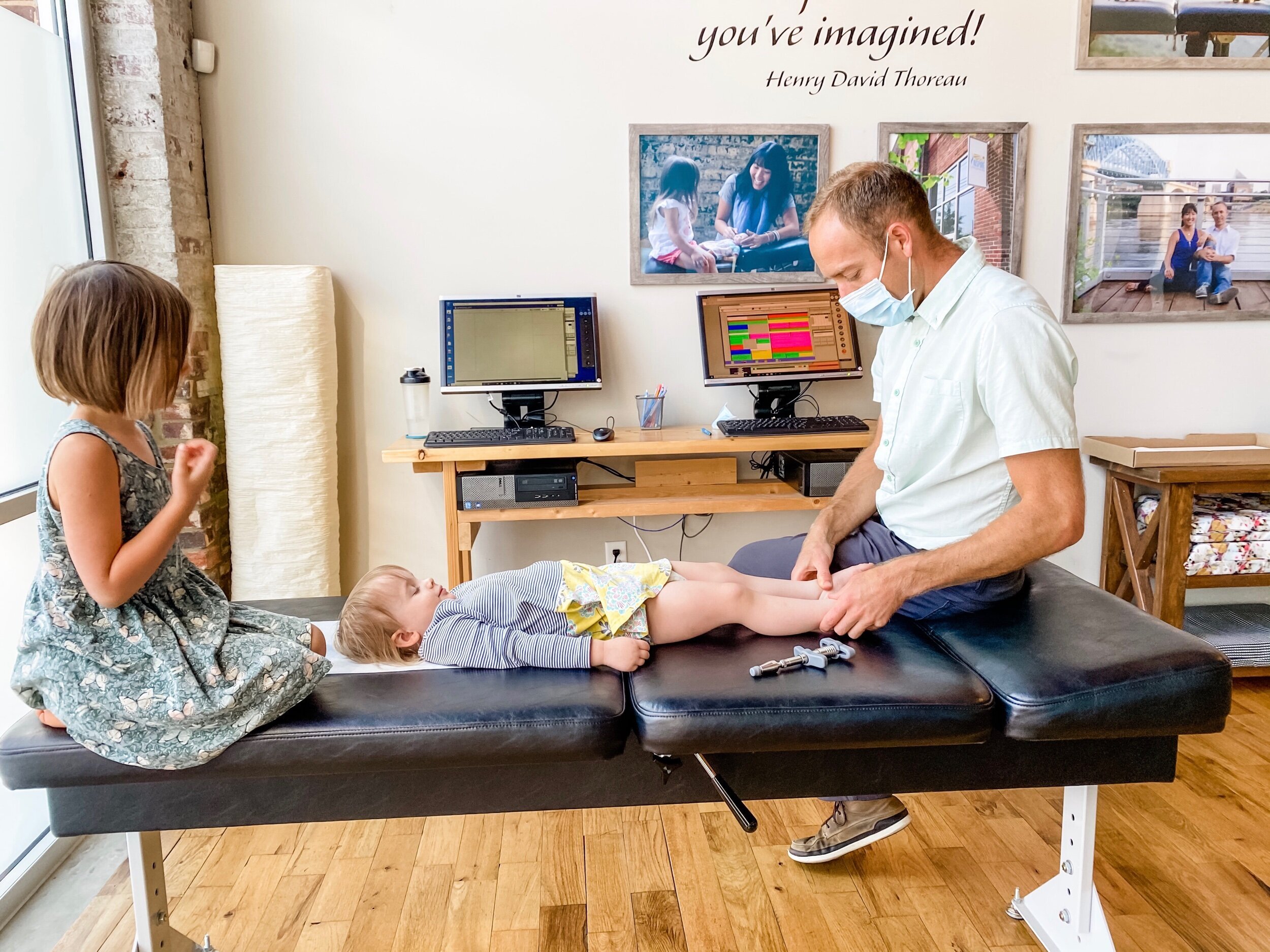
How could our lives be different if we weren’t constantly living in chronically elevated fight-or-flight mode? We often see many kids and adults who suffer from a chronically overactive fight-or-flight response. In kids, this may manifest itself as colic, ear infections, sensory issues, ADD/ADHD, developmental delays, frequent colds and in adults as depression, anxiety, digestive distress, trouble sleeping, allergies, and infertility to name a few.
The flight or flight response is activated by the release of hormones that prepare the body to react to a perceived threat (physical or emotional) for our survival. It’s our body’s innate response for adapting to stress (physical, chemical, and emotional). We either flee or stay to deal with the stress. Our bodies were never designed to stay in survival mode for more than a few hours or days. So while one might say, avoid all negative stresses, that’s not realistic.
We are constantly being bombarded with physical, chemical, and emotional triggers. Our brain doesn’t know the difference between a dog growling and ready to attack vs eating to much sugar, or phobias like public speaking vs getting injured from a fall. We can’t avoid stress that's inenvitable. However, we can adapt and move our body in a way that balances the fight-or-flight response back to normal state or fluid state.
Related: The Importance of the Vagus Nerve
So how do we do this?
We eat well, move well (exercise) and receive proper proprioception into the nervous system. Movement is essential for brain function and nervous system function. As chiropractors, we do this through identifying how your spine is moving or not moving (subluxation). Through specific and gentle adjustments we restore normal movement patterns into the spine. Special receptors called proprioceptors send signals to the brain to eliminate the alarm signals bringing our nervous system back from a “fight or flight” state into a more fluid state.
Lastly we recommend decreasing inflammatory foods and staying hydrated to keep our joints and tissues healthy. This helps the joints move with more ease and reduces the stress response on the body. Some of the foods that are helpful to avoid are grains, sugar, soy, caffeine, corn and dairy and adding healthy omega 3’s are simple ways to maintain fluid motion.
Overtime, these small steps can rebuild resilience to all kinds of stressors and allow the body to break the continuous stress loop.
Read the full article here, which was published in Pathways to Family Wellness, Issue #58
Which Sunscreens are the Safest?
With so many choices out there, it’s hard to know which sunscreens are the best for our health. Plus, we’re of the mindset that making good choices for the planet is making good choices for people, as well. So we set out to find out which sunscreens are the safest - for our reefs and our bodies.

We’re of the mindset that making good choices for the planet is making good choices for people, as well. And, with so many choices out there, it’s hard to know which sunscreens are the best for our health. So we set out to find out which sunscreens are the safest - for our reefs and our bodies.
The best sun protection isn’t sunscreen
The best way to prevent sunburn or skin damage from sun exposure isn’t using sunscreen! It’s avoiding the sun.
Staying out of the sun is the best way to avoid sun damage and any consequences of absorbing or releasing chemicals into the environment. So instead of lathering up in sunscreen, try these alternatives as your first line of defense.
Plan outdoor activities in early morning or late afternoon (UV radiation is highest at midday.)
Find (or make) shade under a tree, umbrella, or sports canopy
Wear protective clothing, like hats, pants, and log sleeves
Protect your eyes with sunglasses
Sun avoidance is smart for all of us, but it’s especially important for infants. Keeping them out of the sun is their best strategy, until they’re at least six months old.
Protect yourself and our reefs
Research shows that some of the chemicals that prevent damage to our skin can do a great deal of damage to our reefs and oceans. In fact, one study showed that as much as 14,000 tons of sunscreen end up in the world’s reefs each year! Some places already ban these ingredients, and you can do your part by avoiding sunscreens that contain these harmful chemicals:
oxybenzone
octinoxate
octocrylene
PABA (Aminobenzoic Acid)
enzacamene
octisalate
homosalate
avobenzone
Note: Don’t wear a single product that combines sunscreen and bug repellent. If you need both, apply your bug spray first.
Learn more about the trouble with chemical sunscreens.
Chemical versus mineral
When you do have to be in the sun, swap out chemical sunscreens for mineral ones. They’re safer for our reefs, and they prevent your body from absorbing chemicals that can appear in your breast milk, urine or blood - even after just a single use. Yuck!
Mineral sunscreens are known as physical sunscreens, because they sit on your skin and reflect the sun’s rays, rather than absorbing and breaking down UV rays. Look for ingredients like zinc oxide or titanium oxide that reflect rays and provide UVA and UVB protection.
And don’t forget that you can pair your mineral sunscreen with a hat, light clothing, and sunglasses for extra protection.
Here’s a list of 10 reef-safe mineral sunscreens.
Which SPF should you use?
Generally speaking, a higher SPF is associated with greater sun protection, but that isn’t exactly the case. Why not? The ratio of UVA protection goes down as SPF increases. That means you could be exposing your skin to higher levels of UVA radiation, which deeply penetrates your skin and can cause long-term skin damage, including melanoma.
It’s true that higher SPF sunscreens can lower your risk of sunburn, but they do so with a huge cost. According to the Environmental Working Group, “U.S. sunscreens offer far less protection against UVA than UVB rays, and this is worst for products with the highest SPF values. Because UVA and UVB protection do not harmonize, high-SPF products suppress sunburn much more effectively than they do other types of sun damage. Five leading sunscreen scientists tested 20 U.S. sunscreens for UVA and UVB protection and found that just two of the seven with SPF values of 50+ and greater would pass the European test for UVA protection (Wang 2017).”

Using the highest SPF means you’re making a tradeoff: less sunburn but a higher risk of serious, long-term damage from UVA rays.
Still not convinced? Higher SPF levels tend to mean higher levels of chemicals, which can be harmful to you and to our oceans. Plus, studies show that products labeled with the highest levels of SPF may not really be high in SPF, anyway.
With this information in mind, don’t buy sunscreens with SPF higher than 50. Even if you’re prone to sunburn, products with SPF of 30 to 50 should provide enough protection.
Learn more about high SPF sunscreens and their risks.
Which is better, spray or cream?
The most effective sunscreen is the one you’ll wear, but the safest option is usually the cream. Sprays are convenient, but they release tiny particles that can irritate your lungs and might not be safe to breathe. Sprays are also harder to apply correctly, so you may miss spots and leave your skin unprotected.
How to apply sunscreen
These tips from the American Academy of Dermatology will help you apply sunscreen properly, to effectively protect your skin.
Choose a sunscreen that has an SPF of 30 to 50, is water resistant, and provides broad-spectrum coverage (UVA & UVB)..
Apply sunscreen 15 minutes before going outdoors.
Apply enough sunscreen, and rub it into your skin thoroughly. Most adults need about one ounce, or enough to fill a shot glass, to fully cover their body.
Apply sunscreen to all skin not covered by clothing. Remember your neck, face, ears, the tops of your feet and your legs. To protect your lips, apply a lip balm with a SPF of at least 15.
Reapply sunscreen every two hours, or immediately after swimming or sweating.
Sunscreen safety summary
Whichever sunscreen you choose, remember to apply it liberally and reapply it often. Also be sure to wear it whenever you’re outdoors, even in winter or on cloudy days. Being a good role model for your kids means safer fun in the sun for the whole family.
Don’t combine bug repellent and sunscreen in a single product
Choose mineral sunscreens that contain zinc oxide or titanium oxide
Look for an SPF of 30-50
Opt for creams, rather than sprays
If you use chemical sunscreen, avoid the eight reef-damaging chemicals
Apply sunscreen correctly, or avoid the sun
While you wait for your sunscreen to dry, enjoy these refreshing Strawberry Watermelon Popsicles.
Belly Breathing with Dr. Joe and Luna
Are you feeling mental strain from the pandemic? If you are, you’re not alone. New CDC data shows that a third of Americans are feeling symptoms of anxiety or depression thanks to the coronavirus pandemic. We’ve talked before about the benefits of deep breathing, and now, Dr. Joe and Luna are here to show you and your kids how to do belly breathing exercises that will calm your mind and relax your nervous system during anxious or stressful times.
Are you feeling mental strain from the pandemic? If you are, you’re not alone. New CDC data shows that a third of Americans are feeling symptoms of anxiety or depression thanks to the coronavirus pandemic. We’ve talked before about the benefits of deep breathing, and now, Dr. Joe and Luna are here to show you and your kids how to do belly breathing exercises that will calm your mind and relax your nervous system during anxious or stressful times.

Day 29: Our Mothers

Journal: Why are you grateful for your mom? The list might be long :)
Health & Happiness,
Dr. Becky :)