
The Father Effect: Being a Great Dad
Children raised with active fathers are more confident, achieve greater academic success, show fewer signs of depression, and are less likely to engage in unlawful behaviors. This is the Father Effect.

“When fathers are actively involved with their children, children do better.”
It’s a no-brainer that children with involved and engaged parents will do better in life than those without. Though it is often the bond between mother and child that dominates headlines, it begs the question, what about dad? Children raised with active fathers are more confident, achieve greater academic success, show fewer signs of depression, and are less likely to engage in unlawful behaviors. This is the Father Effect.
“The Father Effect” is the umbrella term for the benefits of a dad’s presence in a child’s life. Men and women are different, so it stands to reason that the way mothers and fathers are different, too! Fathers parent differently, play differently, communicate differently, discipline differently… Growing up with this diversity offers children a broader experience of interactions, encouragement, and relationships in general.
“When fathers are actively involved with their children, children do better,” states Paul Amato, a sociologist who studies parent-child relationships at Pennsylvania State University. “All of this research suggests that fathers are important for a child’s development.” Research on fatherhood and the effects of engaged, thoughtful fathering is minimal compared to the analyses on motherhood, but scientists and psychologists are desperately trying to make up for lost time, and this research may change the way parents parent.
The Importance of an Engaged Father
It’s no surprise that dads who live with their kids and actively attend school activities and other important events have a more positive impact than fathers who are absent or show up sporadically. But even if you don’t live with your kids full-time, your role as a dad is no less important! It simply means you should focus more on quality time with your kids than the quantity of time you spend with them. Fathers who are warm and engaged for an hour have a far more positive impact than those who are with their kids but less engaged for longer periods of time.
Plus, the way dads interact with their kids is different than what moms typically do, and that means moms and dads work together to teach their children different skills, without even meaning to!
W. Brad Wilcox, a sociologist at the University of Virginia who studies marriage and families, reports these findings about some specific ways dads positively influence their children:
Through rough and tumble play, dads teach kids how to control their bodies and emotions.
Kids who have dads who nurture and play with them grow up to make higher grades and have higher IQs.
Dads are also more likely to encourage risk (within reason!), which can influence kids’ ambitions.
Fathers who believe in, and actively support, gender equality, are more likely to raise daughters who have high career ambitions.
Children whose dads are involved in their lives less likely to experience sexual abuse or assault.
Ultimately, Wilcox concludes, “The more dads engage with their kids, the more likely their kids are to flourish.”
Bonding with Baby During Pregnancy
Pregnancy and labor are when the groundwork for the Father Effect begins. 50 years ago, the thought of a dad being in the delivery room was unheard of. Today, dads take active roles during pregnancy, coach their partners through contractions and delivery, swaddle and diaper their new bundles of joy, and help with bedtime routines and 3 a.m. feedings. These actions also show older children the love and partnership between moms and dads; caring for an infant is a shared gift and responsibility.
Related: The Beauty of Fathering During Pregnancy
Fathering Infants/Toddlers
It can be tough for dads to bond with their infants, especially if they’re nursing and naturally spending lots of time bonding with Mom, but numerous studies have shown a link between cognitive development and infants with actively engaged fathers.
The Father Effect becomes more noticeable in the toddler years. Dads assist with developing social skills and relationships with others.
Connecting with Your Kids
Need more ideas for connecting with your kids? First Things First is a great resource for couples and parents, and we recommend reading their article, 7 Ways Dads Can Connect with Their Kids. Here, we’ve excerpted that list of recommendations for making healthy connections as a dad:
Respect your child’s mother
Spend time with your children
Talk to your children
Discipline with love
Be a role model
Be a teacher
Show affection
“The more dads engage with their kids, the more likely their kids are to flourish.”
Being a Good Dad
There are many factors to being a good dad. Modeling healthy lifestyle choices, coaching your partner through labor and delivery, bonding with your infant and toddler, and being present and involved in your kids’ lives all play vital roles in parenting children into smart, confident, successful adults.
It’s easier than you think to be a great dad! Your kids don’t need you to be perfect, but they do need you to be active, loving participant in their lives.
Our mission is to inspire families to live healthy and happy lives. Contact us today to schedule your consultation.
Real Self-Care for Moms
So often, self-care suggestions for moms are things like bubble baths and manicures, which are perfectly nice, but don’t really do more than offer a few minutes of solitude before re-entering the hectic world of parenting. Real self-care for moms involves more than an hour of relaxation; it’s learning behaviors and tools that support good mental and physical health and allow us to calm our stress.
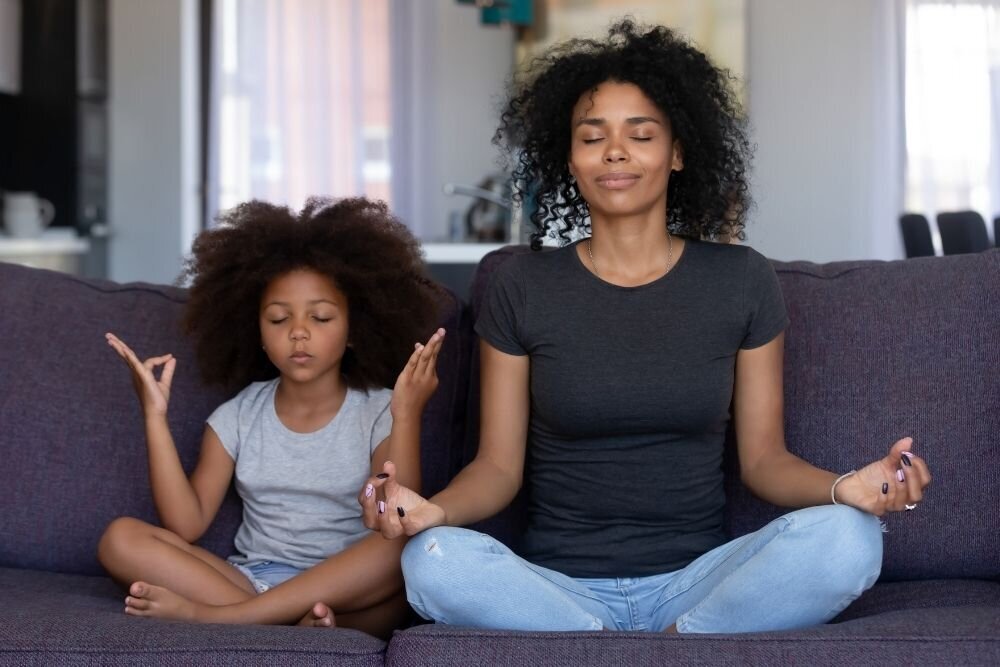
So often, self-care suggestions for moms are things like bubble baths and manicures, which are perfectly nice but don’t do much more than offer a few minutes of solitude before re-entering the hectic world of parenting. Real self-care for moms involves more than an hour of relaxation; it’s learning behaviors and tools that support good mental and physical health and allow us to calm our stress.
“Self-care for mothers means we have a tool kit for daily living, not a “break glass in case of emergency” escape plan.”
Psychologist Christine Meinecke may say it best. She defines self-care as:
“…choosing behaviors that balance the effects of emotional and physical stressors: exercising, eating healthy foods, getting enough sleep, practicing yoga or meditation or relaxation techniques, abstaining from substance abuse, pursuing creative outlets, engaging in psychotherapy. Also essential to selfcare is learning to self-soothe or calm our physical and emotional distress.”
We love how Sarah Rudell Beach broke it down further, in Pathways to Family Wellness. She says:
“…Meaningful self-care for mothers, I would argue, means that we feel truly nurtured and whole where we live day after day…in the crazy zoo of raising little children!
It means we engage in sustainable and doable practices that promote well-being and act as antidotes to the frazzling created by the day-to-day work of parenting.
It means we find ways to be present. It means we find ways to cultivate compassion—for our children and ourselves.
It means we take time for silence—for prayer, meditation, or just three deep breaths—so that we have a stillness and peace that sustains us during the crazybusynoisy moments of our day.’
Parenting is messy, and hard, and funny, and exhausting, and sometimes, more than you think you can handle. But you can do it, mama!
A fundamental element of real self-care for moms is mindfulness, being in the moment, without judgment. Mindfulness offers up space to breathe and think, rather than reacting on autopilot. Mindfulness won’t make your baby cry less, your toddler stop wetting the bed, or your teenager stop pushing boundaries. But it will help you find the mental space to parent with more clarity and peace.
You might also enjoy our blog, For specific suggestions to help you be a more present parent - without trying to be a superhero! -visit our blog, Enjoy Your Kids with Mindful Parenting. If you’re new to mindfulness practice, you may also enjoy reading about How Meditation Changes Your Brain.
Give yourself the gift of self-care this year by learning more about mindfulness and finding ways to take care of your own physical and mental health.
Share the Power of Your Stable Nervous System
If you’ve spent much time around kids, you know there’s no reasoning with a toddler who’s mid-tantrum or an older child who’s in the throes of overwhelm or worry. The same is true for adults! It’s hard to resolve a problem in the middle of an emotional storm. So what can you do to help calm someone who’s angry, anxious, or overwhelmed? Share the power of your stable nervous system.
It’s not as complicated as it sounds.
Sharing your stable nervous system is a form of mindfulness. By being a calming presence, you can help bring someone else’s emotional state back to equilibrium, or something closer to it. In other words, by sitting calmly with them, you can “be the anchor in their proverbial storm.”
“We cultivate this gift, this secret power of our own stable nervous system, each time we sit in stillness. Each time we take a few moments to notice our breath, we invite regulation into our system. And because we are members of a co-regulating species of mammals, our regulation invites the nervous systems around us to regulate as well.”
The next time your child - or anyone you know - seems distraught, give them the gift of your stability. There are several ways to do it, but the main idea is that you remain calm and give them space to talk through their concerns or simply breathe with you. The article, Share the Power of Your Stable Nervous System, offers some specific examples of how to offer your regulated state.
You may also be interested in learning how to Enjoy Your Kids with Mindful Parenting.
“We come into this world immature and dysregulated, and it’s only through the soothing voices, gentle touches, and reciprocal attention of our caregivers that we learn to experience stillness, safety, and peace.”
Learn more about mindfulness practices you can try at home with this video of Belly Breathing with Dr. Joe and Luna.
View the full article in Pathways to Wellness, Issue # 65.